Skip to content
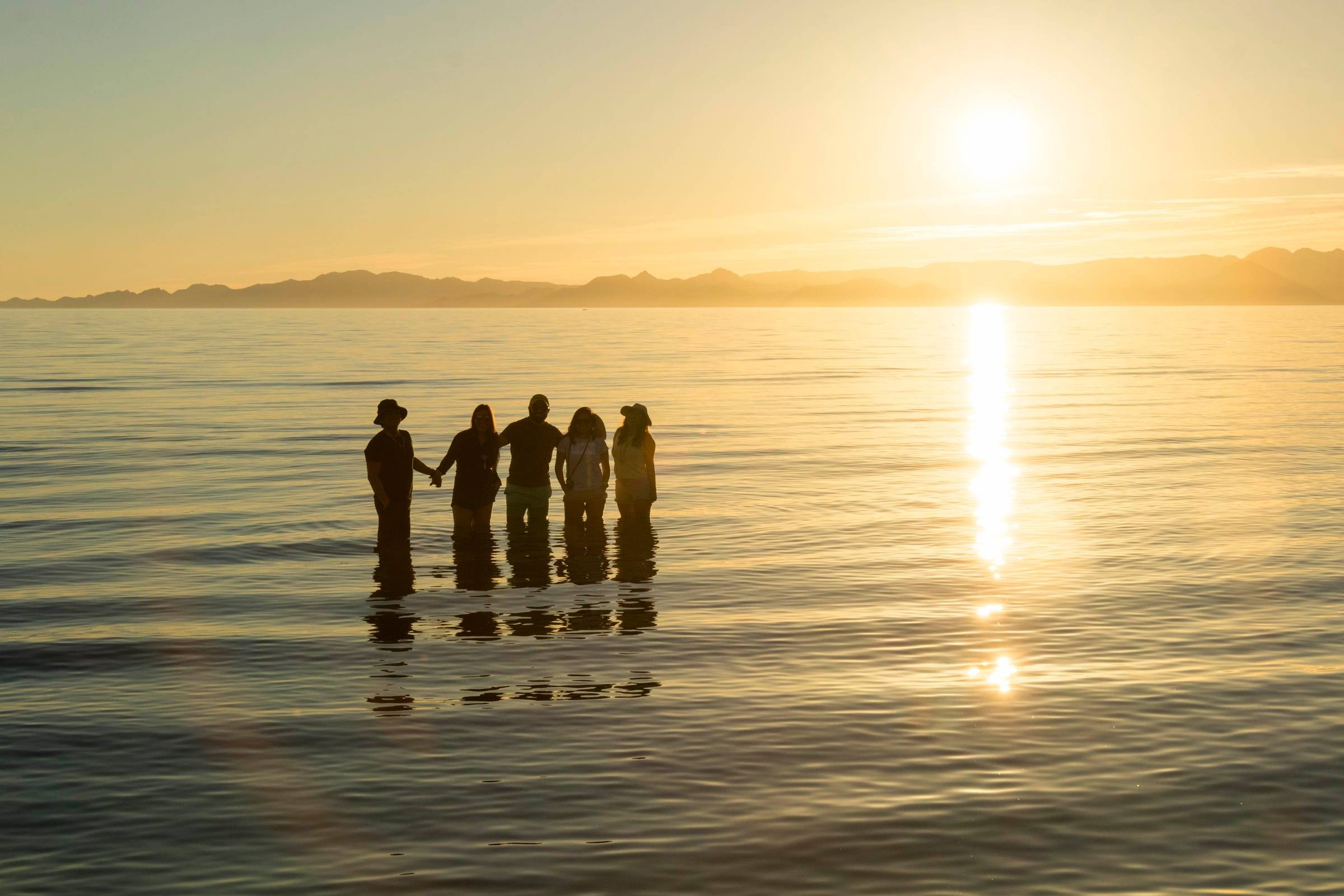
Silhouettes of travellers standing in the Sea of Cortés at sunrise

Sonora Salvaje · 4 days · 3 nights

21–24 April 2027

A four-day expedition from Hermosillo along the Sonoran coast, Tiburón Island and El Pinacate, in its Full Moon version.

☄ Coincides with the peak of the Lyrids

AvailableWed – Sat · Full Moon version

Departure details

Dates
21–24 April 2027
Wed – Sat
Duration
4 days · 3 nights
Departure
Hermosillo, Plaza Emiliana de Zubeldia, 6:00 AM
Typical weather
Day: 26 to 31 °C
Before dawn: 11 to 16 °C
Sun
Sets at 19:10
Rises at 06:00 (last day)

The sky each night

The three nights of the trip

Night 1 · 21 April · Azul Xerena

Sunset
19:10
Sunrise
06:00
Typical temperature
By day, up to about 26 °C; before dawn, about 11 °C.
Cool before dawn: bring a jacket or sweatshirt and a blanket.
Full darkness
20:35 to 04:30
Moon
Full moon, 98% illuminated; rises at 20:25 and sets at 06:45.
Milky Way
The core is above the horizon, in a dark sky, from 00:40 to 04:30; without the Moon, none.
Meteor showers
Lyrids, at their peak.

A full-moon night: the Milky Way fades, but the desert lights up and you can walk without a torch.

Night 2 · 22 April · Campo La Salina

Sunset
19:10
Sunrise
06:00
Typical temperature
By day, up to about 28 °C; before dawn, about 16 °C.
Full darkness
20:35 to 04:25
Moon
Waning gibbous, 94% illuminated; rises at 21:25 and sets at 07:30.
Milky Way
The core is above the horizon, in a dark sky, from 00:40 to 04:25; without the Moon, none.
Meteor showers
Lyrids, at their peak.

A full-moon night: the Milky Way fades, but the desert lights up and you can walk without a torch.

Night 3 · 23 April · El Pinacate

Sunset
19:10
Sunrise
06:00
Typical temperature
By day, up to about 31 °C; before dawn, about 12 °C.
Cool before dawn: bring a jacket or sweatshirt and a blanket.
Full darkness
20:40 to 04:25
Moon
Waning gibbous, 88% illuminated; rises at 22:25.
Milky Way
The core is above the horizon, in a dark sky, from 00:35 to 04:25; without the Moon, none.
Meteor showers
Lyrids, at their peak.

The sky is dark and moonless from 20:40 to 22:25, before the Moon rises. That is the best time for stargazing that night.

Sonora time (UTC−7), calculated for the El Pinacate area; on the coast it may vary by a few minutes. Full darkness is when the Sun is more than 18° below the horizon and no longer brightens the sky. Temperatures: historical average for those dates at the Bahía de Kino, 1991–2012; Puerto Peñasco, 1991–2026; Organ Pipe Cactus, Arizona, 1991–2026 weather station (NOAA); not a forecast, and in the open desert the small hours can be a few degrees colder. Check the forecast a few days before you leave.

SimulatorThe El Pinacate sky, night by night

Drag to look around

Noche de Estrellas (new moon)

2026

2027

Dunas con la Luna (full moon)

2026

2027

Positions of the Sun, the Moon, the guide stars and the Milky Way calculated for the reserve, in Sonora time (UTC−7). The landscape is illustrative. Milky Way photograph: ESO/S. Brunier (CC BY 4.0).

Itinerary

What the trip is like

  1. Day 01 · 21 April — Comcáac territory
  2. Day 02 · 22 April — The road is part of the journey
  3. Day 03 · 23 April — Into El Pinacate
  4. Day 04 · 24 April — Volcanic sunrise and dunes

Full itinerary, what’s included and what to bring

Rates

Sonora Salvaje rates for 2027 are still to be confirmed. Message us on WhatsApp and we will send them as soon as they are ready.

Questions? Message us